Short answer
A ceramic coating is a semi-permanent, hard, hydrophobic layer that bonds to your clear coat. In the Georgia climate it earns its keep by resisting UV fade, shrugging off pollen, bugs and bird droppings, and making every wash faster. It won’t stop rock chips, it won’t prevent swirl marks if you keep using tunnel washes, and it doesn’t make the car self-cleaning. It also makes water spotting worse if you let hard water dry on it in the sun.
What a coating actually is
Strip the marketing away and it’s a liquid polymer, usually silica-based, that cures into a hard, glass-like film chemically bonded to your clear coat. Unlike wax, which sits on the surface and washes off over weeks, a coating becomes part of the surface and lasts years.
Three properties matter, and they’re the three that make it relevant here:
- It’s hydrophobic. Water beads tightly and sheets off, carrying dirt with it.
- It’s non-porous and chemically resistant. Pollen, bugs, bird droppings and acid rain work on the coating rather than your clear coat.
- It blocks UV. It slows the oxidation that fades and dulls paint over a decade of Georgia sun.
Why the Fulton County climate is a good argument for one
Everything a coating is good at, we have in quantity. Long, brutally hot summers with high UV and panel temperatures far above ambient. Six weeks of heavy pollen every spring. Bugs from May to September. Humidity that keeps everything organic sitting wet on paint. And a lot of cars living outside: street parking in the city, uncovered spaces in Sandy Springs and Roswell, driveways in Johns Creek and Milton.
Put plainly: a coated car in this climate stays looking new noticeably longer, and it takes markedly less work to keep there. That’s the honest case for it.
The Georgia problem coatings make worse
Water spots. This is the thing nobody selling a coating mentions, and it’s worth understanding before you spend the money.
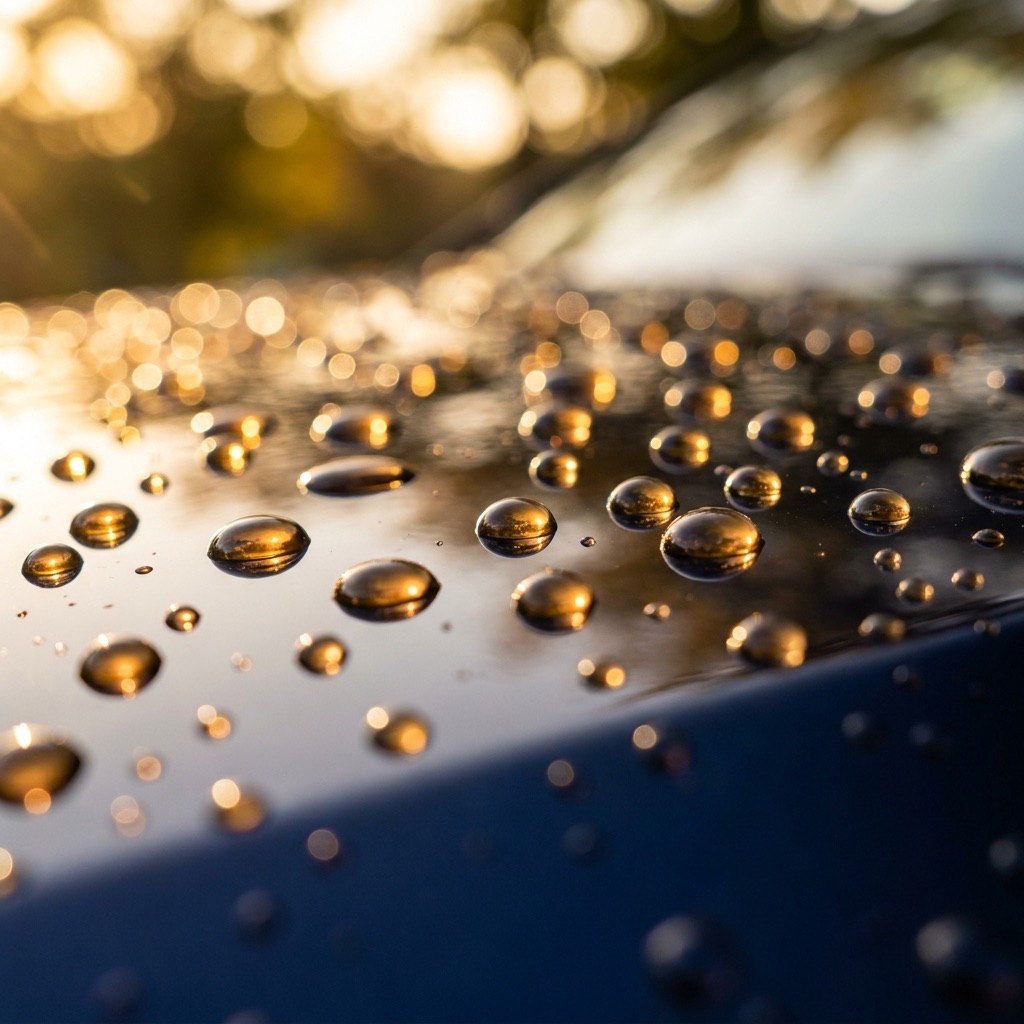
A coated panel is extremely hydrophobic, so water pulls into tight beads instead of sheeting into a film. Each bead is a little lens of mineral-bearing water sitting on a panel that, in a July afternoon, may be well over 130°F. It evaporates fast and leaves a concentrated mineral deposit exactly where it sat.
Sprinkler overspray clipping the driveway, a five-minute afternoon thunderstorm followed by full sun, washing the car at midday. Do that repeatedly and you get etched mineral rings in the coating itself, which take polishing to remove.
The prevention is simple and it’s entirely behavioural:
- Never wash in direct sun or on a hot panel. Early morning, evening, or in shade.
- Dry the car properly. Don’t let it air dry, ever. That’s the single biggest cause of spotting on coated cars.
- Move it out of the sprinkler line. Irrigation water is often the hardest water a car ever meets.
- Rinse after a brief storm if the car then bakes. A short rain that dries on hot paint is worse than no rain at all.
What a coating won’t do
This is where expectations get set badly, so we’ll be blunt.
| “Scratch-proof” | No. A coating is harder than clear coat and resists very light marring, but it won’t stop a tunnel-wash brush, a dirty towel or a key. Wash technique still decides whether your car swirls. |
|---|---|
| “Rock chip protection” | No. Coatings are microns thick. Impact protection is paint protection film, which is a different product entirely. |
| “Never wash it again” | No. It washes far more easily and less often. It still needs washing, and it needs the right kind of washing. |
| “Lasts nine years” | Treat long durability claims sceptically. Realistically, a quality professional coating maintained properly gives strong performance for two to five years, and the maintenance is what determines where in that range you land. |
| “Fixes dull paint” | No, and this matters. A coating locks in whatever is underneath it. Swirls must be polished out before coating or they’re sealed in. |
Preparation is most of the job
If there’s one thing to take away: the coating itself is the last hour of a multi-day process, and the value is almost entirely in what happens before it.
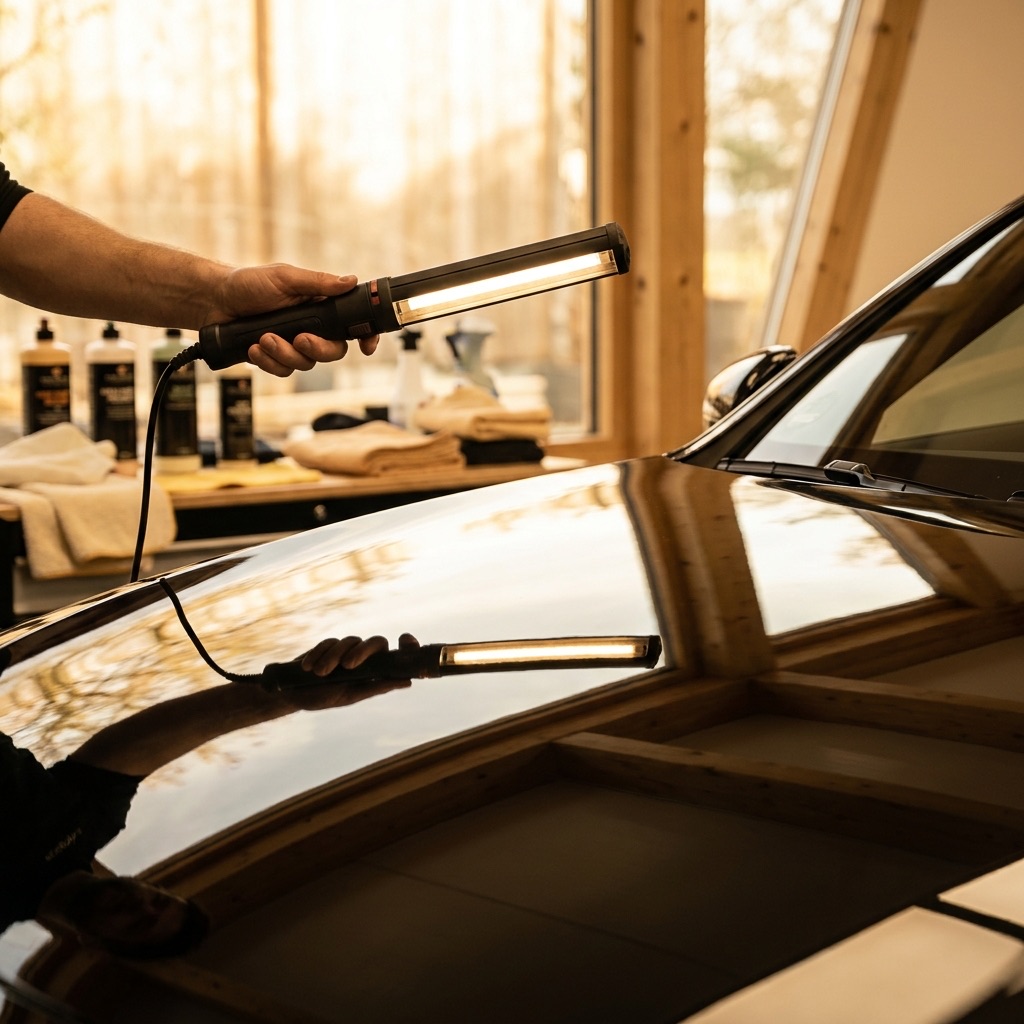
Properly done, that sequence is: thorough wash, chemical decontamination for embedded iron, clay treatment for bonded contamination, machine polishing to remove defects, a panel wipe to strip every trace of polishing oil, and only then the coating, applied in controlled conditions and given time to cure.
A cheap coating quote almost always means that sequence was shortened. Coating over contaminated or unpolished paint bonds poorly, fails early, and preserves every defect it covered. It’s the clearest example in detailing of getting exactly what you pay for.
How to maintain one so it lasts
- Hand wash only, two buckets, pH-neutral soap. Friction tunnels undo the whole investment.
- Wash every two weeks or so. Coatings shed dirt; they don’t dissolve it, and contamination left long enough will still bond on top.
- Dry every time. See the water-spot section. This is the one that actually kills coatings in Georgia.
- Use a topper. A compatible silica spray sealant after washing refreshes the hydrophobics and adds a sacrificial layer.
- Have it decontaminated annually. Iron still embeds on top of a coating; removing it restores performance.
Is it worth it for your car?
Our honest filter: a coating makes sense if the car lives outside, if you intend to keep it more than two years, and if you’re willing to change how it gets washed. Meet all three and it’s one of the better things you can do for a vehicle in this climate.
Miss the third one, and the car goes back through a friction tunnel every week, and you’re paying premium money for a finish that will look no better in a year, and we’ll tell you so. Our coating tiers are listed with what each one includes, and we’d rather sell you the right one than the biggest one.
We coat cars where they live
BlackLine Detail Company works across Fulton County by appointment: Atlanta, Sandy Springs, Roswell, Johns Creek and Milton. Coating work is weather- and temperature-dependent, so we schedule it deliberately and we’ll move a booking rather than apply a coating in the wrong conditions.